

Our Guide to Accessible Bathroom Conversions
The bathroom is one of the most important rooms to address when planning for aging in place or improving home accessibility. It is also one of the most commonly overlooked until a fall or mobility challenge makes everyday tasks difficult. According to the Centers for Disease Control and Prevention (CDC), falls are the leading cause of injury among older adults, and bathrooms are one of the highest-risk areas in the home.
The good news is that an accessible bathroom conversion can dramatically improve safety, independence, and confidence without sacrificing comfort or style. Whether you are planning ahead for aging in place or making modifications after an injury or medical diagnosis, thoughtful accessibility upgrades can make daily routines easier for years to come.
Liv Home Pros proudly serves Rochester, Monroe County, and communities throughout Western and Central New York with customized bathroom accessibility solutions. This guide explains the five key considerations when planning an accessible bathroom conversion, the benefits of these upgrades, and what to expect when working with our experienced accessibility specialists.
The Importance of Bathroom Conversions
Remodeling your bathroom goes beyond upgrading its appearance. It also allows those with reduced mobility independence in their home and peace of mind for their family members. At Liv Home Pro, we assist you in eliminating the barriers that hinder free accessibility within your bathroom. Fixing all issues and improving the bathroom’s functionality can make the bathroom a safe and enjoyable room in the home. Below are some of the key considerations and benefits of converting your bathroom.
Key Considerations for Converting Bathrooms
To create an accessible bathroom, a few things must be considered, including the best layout for your needs, what bathroom fixtures are necessary, such as bars or benches, and what your overall accessibility goals are. Addressing these key considerations will ensure your new bathroom is functional and safe. Here are our five essential elements you need to consider before converting your or a loved one’s bathroom.
1. Layout Optimization
When it comes to accessibility, ensuring ample space for maneuverability is crucial. Deciding on an ideal layout for your needs can make a significant difference in creating a safe environment with minimal obstacles. The Liv Home Pros team can evaluate your bathroom’s current layout and provide recommendations based on your needs and concerns. This may involve repositioning fixtures, creating open pathways or widening doors, and considering the placement of grab bars and other support features.
Every bathroom layout is different, which is why accessibility improvements should be customized rather than approached with a one-size-fits-all solution. During a home assessment, Liv Home Pros evaluates factors such as doorway width, available turning space, fixture placement, and how you currently move through the room.
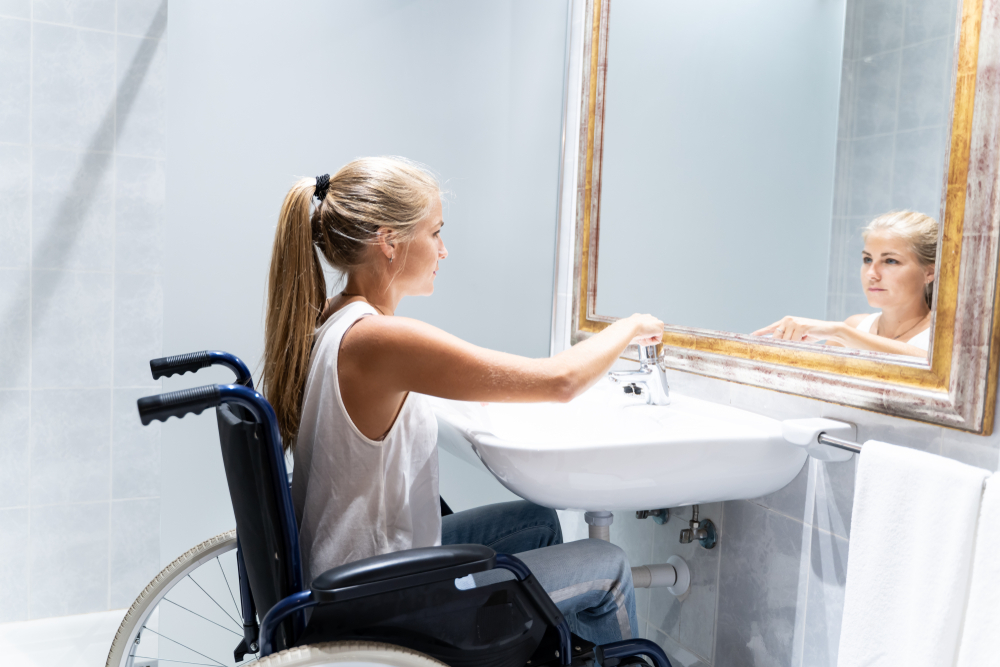
In many cases, accessibility improvements may include widening the doorway to provide at least 32 inches of clear passage, creating a 60-inch turning radius for wheelchair users, repositioning fixtures to improve maneuverability, or replacing traditional cabinetry with accessible vanities that provide knee clearance.
These thoughtful adjustments create a safer, more functional bathroom while maintaining an attractive appearance.
2. Bathroom Fixtures and Equipment
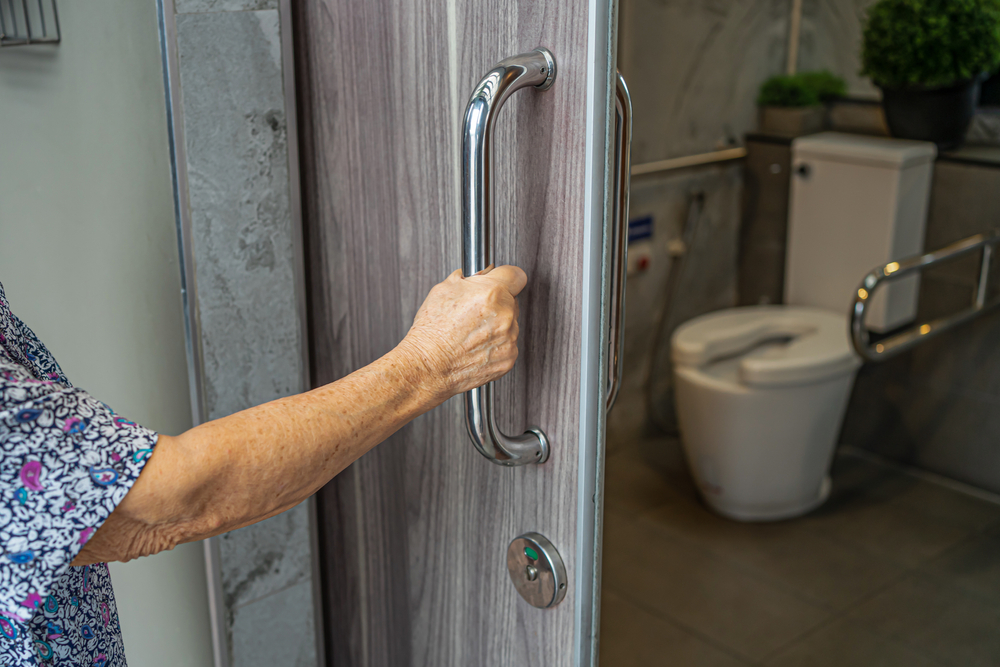
Installing the right fixtures and equipment is essential in creating an accessible bathroom. For example, strategically incorporating grab bars throughout the space can provide stability and support. A slip-resistant flooring that is easy to maintain, such as textured vinyl, can enhance safety, especially in shower areas. You may also consider installing a sturdy shower seat or bench for a comfortable bathing experience.
Selecting the right accessibility products depends on each person’s mobility, balance, and long-term goals. While grab bars and shower seating are among the most common upgrades, many homeowners also benefit from handheld showerheads, anti-scald valves, comfort-height fixtures, lever-style faucets, and slip-resistant flooring.
Choosing products designed specifically for accessibility helps reduce fall risks while creating a bathroom that remains comfortable and easy to use for years to come.
3. Accessible Showers
Walk-in showers are an excellent upgrade to make bathrooms more usable. They eliminate the need to balance on one leg and step over a high bathtub wall, often without handrails nearby. Walk-in showers can be designed with no threshold or a low-threshold entry, allowing for easy entry and exit. Additionally, installing lower, handheld showerheads, sturdy benches, and adjustable shower controls can improve the convenience of the shower.
For many homeowners, a complete tub-to-shower conversion provides the greatest improvement in both safety and accessibility. Replacing a traditional bathtub with a custom walk-in shower eliminates the need to step over a high tub wall, one of the most common causes of bathroom falls. Modern accessible showers can include low- or zero-threshold entries, built-in seating, handheld showerheads, strategically placed grab bars, and slip-resistant flooring for a safer bathing experience.
If you’re specifically considering replacing a bathtub with a walk-in shower, be sure to read our detailed guide on How Tub-to-Shower Conversions Aid in Aging in Place, where we explain the installation process, design options, and benefits in greater detail.
4. Toilet Accessibility
Making the toilet area accessible is another crucial consideration. Installing a raised toilet seat can make it easier for individuals with reduced mobility to sit down and stand up. Grab bars strategically placed near the toilet can provide additional support and stability.
Depending on an individual’s mobility needs, additional upgrades may include ADA-height toilets, grab bars securely anchored into wall studs, toilet safety frames, bidet seats with remote controls, and additional clear floor space for wheelchair transfers.
During a home assessment, Liv Home Pros recommends the combination of products that best supports both current and future accessibility needs, helping homeowners remain independent as their mobility changes over time.
5. Lighting and Visual Contrast
Adequate lighting is essential for creating a safe and accessible bathroom. Light fixtures that are strategically placed and with ample brightness can improve visibility and reduce the risk of slips, falls, and bumps. Additionally, incorporating features for individuals with visual impairments, such as contrasting color schemes or textures, can help them safely navigate the bathroom with ease.
Lighting should also minimize shadows and illuminate key areas such as the shower entrance, toilet, and vanity. Many homeowners choose bright LED lighting, motion-activated night lights, or illuminated switches to improve visibility during nighttime bathroom visits. Even small lighting improvements can significantly reduce the likelihood of slips and falls while making the bathroom easier to navigate.
The Benefits of Bathroom Conversions
1. Improved Safety
The primary benefit of converting your bathroom into an accessible space is to improve safety. You can significantly reduce the risk of accidents by eliminating hazardous obstacles such as high bathtub walls, slippery floors, and narrow doorways. Installing grab bars and stabilizing equipment such as benches in the shower, easy-to-reach handheld showerheads, and toilet rails can also provide individuals with reduced mobility the necessary support to maintain balance and reduce the risk of accidents.
2. Facilitate Independence
Bathroom conversions increase autonomy for individuals with reduced mobility by minimizing the need for external assistance. By making minor adjustments, such as widening doorways and enabling easy transfer from a wheelchair to a chair in the shower, people with disabilities can live independently and with dignity. Bathroom conversions also promote confidence and self-esteem, which positively impacts the mental and emotional health of the individual.
3. Increased Accessibility
Accessibility is not just a matter of convenience; it’s a human right. By removing barriers to accessibility, individuals with disabilities can participate in more regular daily activities and live independently. The bathroom is often a forgotten room to renovate, but it is one of the most important rooms that everyone should be able to access with ease.
Ready to Start Your Bathroom Conversion in Rochester Or Nearby Areas?
Every accessible bathroom conversion begins with understanding your unique mobility needs, your home’s current layout, and your long-term goals. Whether you’re planning for aging in place, recovering from surgery, supporting a loved one, or simply looking to improve bathroom safety, Liv Home Pros is here to help.
Our experienced accessibility specialists provide free in-home assessments throughout Rochester, Monroe County, and surrounding communities across Western and Central New York. During your visit, we’ll evaluate your bathroom, discuss the best accessibility solutions for your needs, and provide a detailed recommendation with a no-obligation quote.
From walk-in showers and grab bars to accessible fixtures and complete bathroom conversions, we manage every step of the project with safety, quality, and comfort in mind.
Call Liv Home Pros today at 585-203-9200 to schedule your free home assessment and take the first step toward a safer, more accessible bathroom.
Frequently Asked Questions (FAQs)
What is an accessible bathroom conversion?
An accessible bathroom conversion is a remodeling project that modifies an existing bathroom to make it safer and easier to use for people with reduced mobility, disabilities, or those planning to age in place. Common modifications include widening doorways, installing grab bars, converting a bathtub to a walk-in shower, adding a shower bench and handheld showerhead, upgrading to an ADA-height toilet, improving lighting, and replacing slippery flooring with non-slip surfaces. The scope can range from targeted additions to a complete bathroom remodel.
What should I consider before converting my bathroom for accessibility?
Five key considerations before an accessible bathroom conversion: (1) Layout – is there enough space for mobility aids and wheelchair turning radius? (2) Fixtures and equipment – which grab bars, benches, and showerheads are needed? (3) Shower type – is a walk-in shower or tub-to-shower conversion appropriate? (4) Toilet access – does the toilet height and surrounding space allow safe transfers? (5) Lighting – is visibility adequate throughout the bathroom, especially near steps and thresholds? A CAPS-certified specialist can evaluate all five during a free home assessment.
Are grab bars required in an accessible bathroom?
Grab bars are not legally required in private homes, but they are among the most impactful safety additions available. They should be installed next to the toilet, inside the shower, and at the shower entry. Critically, grab bars must be professionally installed into wall studs- not adhesive-mounted or suction-cup. Only stud-anchored bars are safe for full weight-bearing use during a fall. Liv Home Pros installs all grab bars with proper structural anchoring.
How wide does a bathroom door need to be for wheelchair access?
A minimum clear door width of 32 inches is required for basic wheelchair passage, with 36 inches preferred for comfortable access. Standard bathroom doors are typically 24–28 inches- too narrow for most wheelchairs. Widening a bathroom doorway is one of the most commonly needed modifications in older Rochester homes. Liv Home Pros handles doorway widening as part of a complete accessible bathroom conversion or as a standalone modification.
How much does an accessible bathroom conversion cost in Rochester, NY?
Cost depends on scope. Liv Home Pros provides free assessments and detailed written quotes with no obligation. Financing is available through Wisetack whle you can also check your Funding options at our Funding Options Page.
How long does an accessible bathroom conversion take?
Timeline depends on scope. Grab bar installation can be completed in a few hours. A tub-to-shower conversion typically takes one to three days. A complete accessible bathroom remodel may take one to two weeks. Liv Home Pros provides a specific timeline during the free home assessment, included in the written quote. Most projects include a clear schedule so the homeowner knows exactly what to expect each day.
Does Liv Home Pros do accessible bathroom conversions in Rochester, NY or nearby areas?
Yes. Liv Home Pros is Rochester’s CAPS-certified accessible bathroom conversion specialist, serving Monroe County and surrounding Western and Central New York. We handle everything from targeted grab bar installation to complete accessible bathroom remodels. Free home assessments with written quotes provided at no charge. Call 585-203-9200 or visit livhomepros.com/contact/ to schedule.