

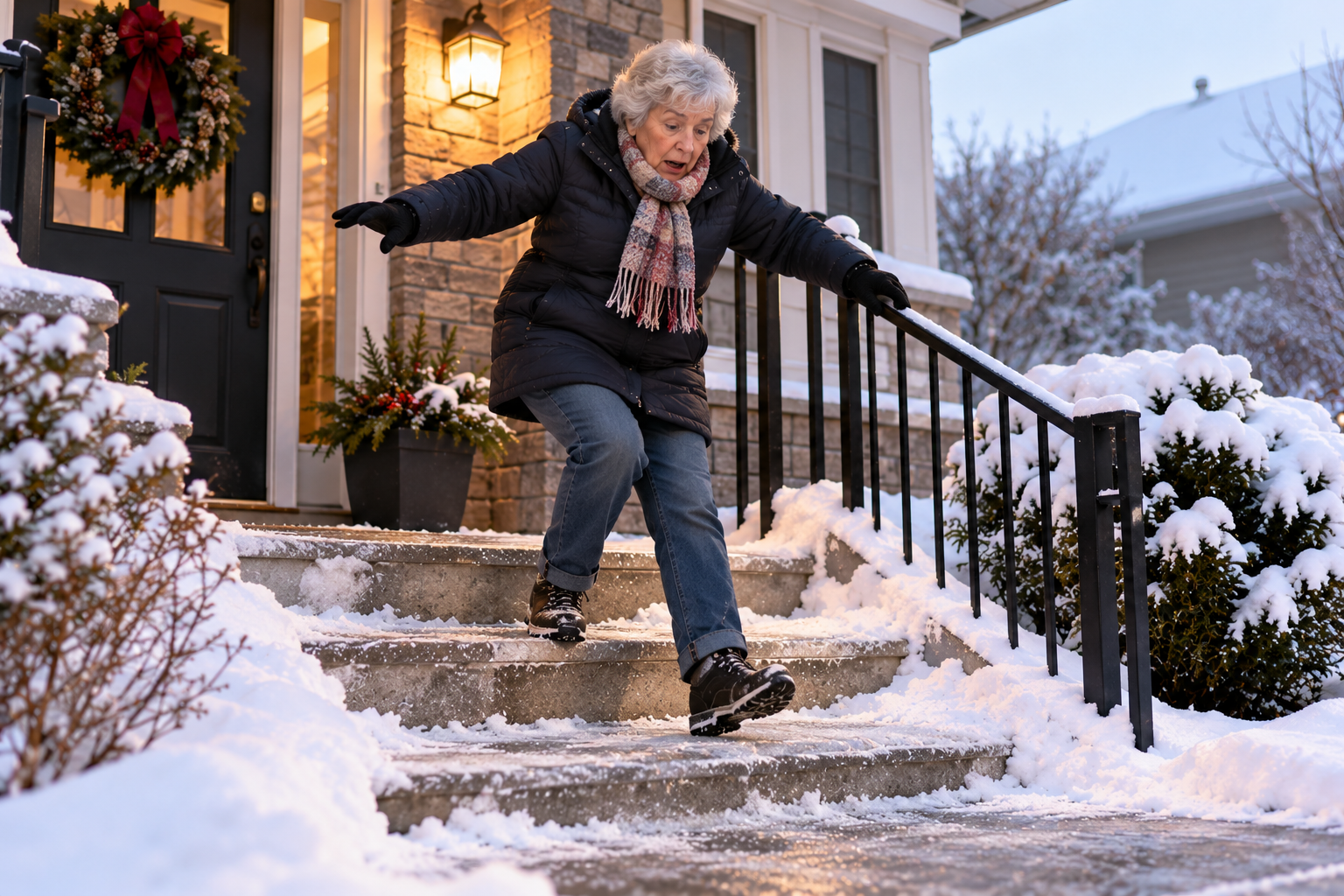
Snow and ice can make everyday activities more challenging, especially for older adults and anyone who has difficulty with balance or mobility. Falls are a major safety concern: the Centers for Disease Control and Prevention (CDC) reports that more than one in four adults aged 65 and older falls each year.
A few practical habits can help reduce winter hazards, from choosing footwear with good traction to using handrails and avoiding icy walkways. Home improvements can also make entrances easier to navigate during colder months.
In this guide, Liv Home Pros shares winter fall prevention tips for seniors and explains how thoughtful home accessibility improvements can help you prepare for snow and ice in Rochester, NY, and surrounding communities.
Proper Gear
Choose stable winter boots or shoes with nonskid soles that provide good traction. If you use a cane, check that its tip is in good condition and replace it if it is worn. Wear gloves or mittens to keep your hands warm while leaving them free to help you balance.
When you come inside, remove wet or snowy footwear and keep melting snow from collecting on floors near the entrance. A suitable mat can help manage moisture, but make sure it lies flat and does not slide underfoot.
If icy conditions make going outside unsafe, consider postponing the trip or asking family, neighbors, or a delivery service for help. If you use a cane, walker, or other mobility aid, ask a healthcare professional or occupational therapist whether it is appropriate for your needs and how to use it safely in winter.
Stay Alert & Plan Your Route
Before heading outside, check the weather and look for a route with cleared, treated walkways. Avoid icy shortcuts and watch for black ice, which can look like an ordinary wet patch. Be especially careful around driveways, steps, curb edges, and areas where snow may conceal uneven surfaces.
If a walkway has not been cleared or appears slippery, choose another route or wait until conditions improve. When the weather is particularly hazardous, staying indoors and arranging help with errands may be the safer option.
Keep Your Hands Free
Wear gloves or mittens to keep your hands warm, but avoid putting your hands in your pockets while walking on snow or ice. Keeping your hands free makes it easier to reach for a handrail and maintain your balance.
Avoid carrying heavy or bulky loads that block your view or affect your balance. A backpack, a smaller bag, or several lighter trips can make it easier to move carefully.
Advance Slowly & Deliberately
Give yourself extra time when walking in winter conditions. Take small, deliberate steps, avoid rushing, and pay attention to the surface ahead. Wet leaves, packed snow, hidden ice, and sudden changes in elevation can all make walking more difficult.
If a path looks unsafe, do not feel you have to cross it. Turn back, choose a safer route, or ask for assistance when needed.
Use Handrails When Available
Use a sturdy handrail when going up or down outdoor steps, and hold it for the full length of the staircase. Take extra care at the first and last steps, where changes in level can be easy to misjudge.
If the steps at your entrance do not have a secure handrail, consider having one professionally installed. A properly placed handrail can provide a stable point of support when entering or leaving your home.
Learn more about grab bars and handrails from Liv Home Pros.
Make Your Entrance Winter-Ready
Snow, ice, and early winter darkness can make the steps and walkways outside your home more difficult to navigate. Preparing your entrance before winter weather arrives can help you identify hazards and consider improvements that make coming and going easier.
Handrails for Entry Steps
A sturdy handrail can provide support when using outdoor steps. If your entrance lacks a secure handrail, or the existing one is difficult to grip, consider having the setup assessed by a professional.
Explore grab bars and handrails from Liv Home Pros.
Ramps for Easier Access
For people who have difficulty with steps or use a wheelchair or walker, a ramp may provide an alternative route into the home. The design, slope, surface, and available space all need to be considered. A ramp also requires appropriate snow and ice maintenance during winter.
Learn more about residential ramp solutions.
Outdoor Lighting
Good lighting can make it easier to see steps, walkways, and changes in ground level when leaving or returning home in the dark. Check that exterior lights are working and that the main entrance and approach are adequately illuminated.
See lighting and other home safety solutions.
When Stairs Become Difficult
If climbing the steps is becoming challenging, there may be other accessibility options to consider. Depending on the entrance, available space, equipment specifications, and the person’s needs, an outdoor-rated stairlift or a vertical platform lift may be worth discussing with an accessibility professional.
Explore stairlifts and vertical lifts to learn about available solutions.
Keep the Area Just Inside the Door Safe
Melting snow can leave indoor floors wet and slippery. Use a suitable mat that lies flat, keep the entrance clear of clutter, and clean up water promptly. Check that mats do not curl at the edges or slide when stepped on.
The right improvements depend on your home, mobility needs, and how you use the entrance. A home evaluation can help you identify areas to review and discuss possible solutions.
Prepare for Winter with a Safer, More Accessible Home
Winter should not mean giving up the activities and routines that matter to you. Taking sensible precautions, keeping walkways clear, and addressing difficult steps or poorly lit entrances can help you prepare for the season.
If you or a loved one is finding it harder to enter or leave the home safely, Liv Home Pros can help you explore accessibility options such as handrails, ramps, stairlifts, vertical lifts, and lighting solutions.
Call 585-203-9200 or visit our contact page to discuss your needs and ask about a free home evaluation.
For more guidance, read our guide to creating a safe environment for aging in place.
Frequently Asked Questions (FAQs)
How can older adults reduce the risk of falls on snow and ice?
Wear winter footwear with good traction, use cleared and treated walkways, take small deliberate steps, keep your hands free, and use handrails on stairs. When conditions are hazardous, consider staying indoors or asking someone to help with errands.
What kind of footwear is best for walking in winter?
Choose stable winter boots or shoes with nonskid soles and good traction. Avoid smooth-soled footwear on icy surfaces. If you use a cane, check that its tip is in good condition.
Why should I keep my hands free when walking on ice?
Keeping your hands out of your pockets and avoiding heavy loads makes it easier to reach for a handrail and maintain your balance. Gloves or mittens can keep your hands warm while leaving them available for support.
Should I use handrails on icy steps?
Yes. Use a sturdy handrail when available, and hold it while moving up or down the steps. If your entrance lacks a secure handrail, consider having it assessed for a suitable installation.
What home improvements can help make an entrance safer in winter?
Depending on the home and the person’s needs, improvements may include secure handrails, a suitable ramp, better outdoor lighting, or an accessibility lift. Clearing snow and ice and maintaining a safe walking surface remain important even after modifications are installed.
Do mobility scooters prevent falls on ice?
No mobility device can eliminate the risks associated with icy surfaces. A scooter may also lose traction in slippery conditions. Anyone using a mobility aid should follow the manufacturer’s guidance, avoid unsuitable surfaces, and ask a healthcare professional or occupational therapist about safe use.
What should I do if I fall during winter?
Check whether you are injured and seek help rather than rushing to stand up. If you have a serious injury, cannot get up safely, or may have injured your head, contact emergency services. Tell your healthcare professional about the fall, even if you initially feel fine, because a fall may indicate a need to review your health, medications, mobility, or home environment.
Does Liv Home Pros help make homes safer for winter in Rochester, NY?
Liv Home Pros offers home accessibility solutions, including handrails, ramps, stairlifts, vertical lifts, and lighting. Call 585-203-9200 or visit the contact page to discuss your home’s needs and ask about a free home evaluation.