

Sometimes the first sign that your bathroom needs to change isn’t a fall. It’s a small moment you almost ignore.
Maybe you hold onto the wall when stepping out of the tub.
Maybe you have started moving more slowly when getting in.
Maybe you find yourself thinking, “I can still do it. It’s just getting a little harder.”
Those moments matter more than most people realize.
According to the CDC, falls are the leading cause of fatal and nonfatal injuries among adults 65 and older, and more than 1 in 4 older adults report falling each year. CDC research on bathroom injuries has also found that falls account for about 80% of bathroom injuries, with bathing, showering, and getting out of the tub or shower among the activities most often associated with injury.
The important part is that none of these warning signs require a fall to be worth paying attention to.
A traditional bathtub can become increasingly difficult to navigate as balance, strength, flexibility, or mobility changes. And because these changes often happen gradually, families may not recognize the bathroom as a potential safety concern until something more serious happens.
The good news?
You don’t have to wait for a fall to decide that your bathroom needs to work differently.
Here are seven signs that your bathtub may be becoming a barrier rather than a benefit.
1. You Hold Onto Something When Getting In or Out
Pay attention to what your hands do.
If you automatically reach for the wall, towel bar, shower door, or another nearby surface when stepping over the tub, your body may already be looking for additional stability.
That doesn’t necessarily mean something is wrong. But it is worth noticing.
A traditional bathtub requires you to shift your weight onto one leg while lifting the other over the tub wall. If you need to steady yourself during that movement, the entry itself may be becoming one of the more challenging parts of your bathroom routine.
And a towel bar isn’t designed to serve as a grab bar.
That’s an important distinction. A towel bar may look like something you can grab when you feel unsteady, but it isn’t designed or installed for that purpose. Properly selected and professionally installed grab bars are specifically intended to provide stable support where it is needed.
The CDC recommends grab bars inside and outside tubs or showers as one part of making a home safer for older adults.
If you need support, properly positioned and professionally installed grab bars can provide a more dependable point of stability.
2. Stepping Over the Tub Wall Takes More Effort Than It Used To
You might notice that you’re lifting your leg higher.
Or taking a moment to steady yourself before stepping over.
Or turning your body in an awkward way just to get into the tub.
These movements can seem insignificant when they happen occasionally. But when a daily activity starts requiring more effort, it may be worth asking whether the bathroom is still designed around your needs.
Your bathroom shouldn’t require you to work harder just to take a shower.
3. You Avoid Bathing Because the Tub Doesn’t Feel Comfortable or Secure
This is one of the signs families often overlook.
Maybe you shower less frequently because getting in and out feels like too much work.
Maybe you don’t enjoy bathing the way you used to.
Maybe you’re constantly thinking about where to place your feet or what you can hold onto.
When a bathroom starts creating hesitation, the issue isn’t simply convenience.
The space may be affecting your confidence.
A safer bathroom should allow you to focus on getting clean and comfortable, not on worrying about every movement.
4. Someone Has Started Helping You Get In or Out
If a spouse, adult child, caregiver, or another family member has started assisting you with bathing, it may be time to take a closer look at the bathroom itself.
Sometimes the person doesn’t need more assistance.
The environment needs to provide better support.
A bathroom can be modified with features such as grab bars, shower seating, improved access, and other accessibility solutions to make everyday tasks easier.
The right modification depends on the person and the space. That’s why Liv Home Pros starts with understanding the individual’s needs rather than simply recommending a product.
5. You’re Thinking About Adding a Shower Chair or Grab Bars
This may sound like a small thing, but it’s actually an important signal.
If you’re already thinking:
“Maybe I should put a grab bar here.”
or
“Maybe I need somewhere to sit while I shower.”
take that thought seriously.
These aren’t necessarily signs that you need a major bathroom remodel.
They may simply mean your bathroom needs a few thoughtful changes to make it easier and safer to use.
For example, professionally installed grab bars can provide support during transitions, while a shower chair can give you the option to bathe while seated. Liv Home Pros offers both as part of its home safety solutions.
6. You Don’t Have Enough Room to Move Comfortably
Take a look at the space around your tub.
Can you get in and out easily?
Can someone assist you without feeling cramped?
Is there enough room to move if you begin using a walker or another mobility aid?
A bathroom that feels perfectly spacious today may feel very different when mobility changes.
Limited space can make simple movements more complicated, particularly when you’re trying to enter or exit the bathing area.
Sometimes the solution isn’t adding more equipment.
It’s removing a barrier.
Replacing a traditional tub with a more accessible shower configuration can open up the bathing area and create more room for movement and additional safety features.
7. You’re Thinking, “I Can Still Do It, But…”
This may be the biggest sign of all.
“I can still get into the tub, but…”
“I can still shower, but…”
“I can still manage the stairs, but…”
That “but” deserves attention.
You don’t need to wait until something becomes impossible before making your home easier to use.
Small changes made while you’re still confident and independent can give you more choices later.
And sometimes the smartest home modification isn’t the one you need today.
It’s the one that helps your home continue working for you as your needs change.
What Can You Do If Your Bathtub Is Becoming a Barrier?
The good news is that replacing the entire bathroom isn’t always necessary.
Depending on your needs and your existing space, there are several options to consider.
Add Professionally Installed Grab Bars
If the primary challenge is stability, properly positioned grab bars may provide the support you need during important transitions.
Add Shower Seating
A shower chair or bench can provide an option for seated bathing and reduce the amount of time you need to remain standing.
Consider a Tub Cut
A tub cut modifies the existing bathtub to create a lower entry point. This can be an option for homeowners who want to reduce the step-over barrier without completely replacing the tub.
Consider a Tub-to-Shower Conversion
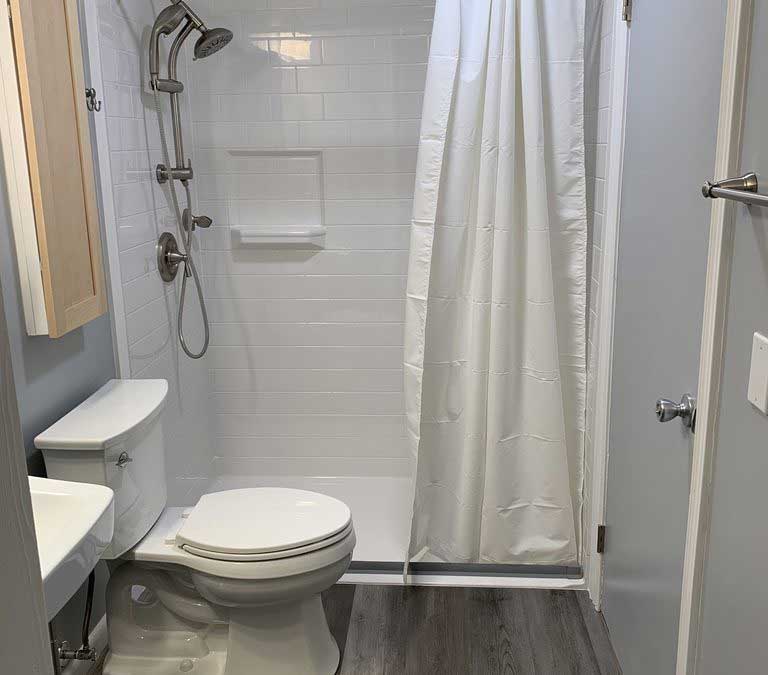
If the bathtub itself has become the primary barrier, replacing it with a low-threshold or walk-in shower may provide a more comprehensive solution.
Liv Home Pros offers tub-to-shower conversions as part of its accessible remodeling services, including options for shower seating and grab bars.
Want to understand how a tub-to-shower conversion can support aging in place? Read our guide: How Tub-to-Shower Conversions Aid in Aging in Place
Look at the Bathroom as a Whole
Sometimes the tub isn’t the only issue.
Lighting, flooring, toilet height, pathways, shower controls, and other features can affect how safely and comfortably someone moves through the bathroom.
A professional home evaluation can help identify which changes would actually make the biggest difference instead of simply adding modifications one at a time.
Considering more than one bathroom modification? Explore our complete guide to accessible bathroom conversions.
Do You Need to Replace Your Bathtub?
Not necessarily.
If you can use your bathtub comfortably and confidently, there may be no reason to replace it.
But if you’re experiencing several of the signs above, it’s worth having a conversation about your options.
The goal isn’t to make your home look “accessible.”
The goal is to make your home easier to live in.
And that distinction matters.
Accessibility can be beautiful. Safety features can blend into the design. And modifications can be made around the way you actually live rather than making your home feel clinical or institutional.
The Best Time to Address a Bathroom Barrier Is Before It Becomes a Crisis
Families often think about home modifications after a fall, an injury, or a significant change in mobility.
But you don’t have to wait for that moment.
If getting in and out of your bathtub is becoming more difficult, that’s information worth paying attention to.
Maybe you need one grab bar.
Maybe you need shower seating.
Maybe a tub cut is enough.
Or maybe a tub-to-shower conversion makes the most sense.
You don’t have to know the answer before asking the question.
A professional assessment can help you understand what’s making your bathroom difficult to use and what options are available.
A Safer Bathroom Starts With Paying Attention
Your body often tells you that something has changed before you are ready to admit that it has.
The hand reaching for the wall.
The extra pause before stepping over the tub.
The decision to skip a shower.
The family member who has started standing nearby.
These moments aren’t something to be embarrassed about.
They’re opportunities to make your home work better for you.
Because the goal isn’t to wait until you can’t use your bathroom safely.
It’s to create a bathroom that helps you stay confident, comfortable, and independent at home.
Ready to Make Your Bathroom Easier to Use?
You don’t have to figure out the right modification on your own.
Liv Home Pros offers free home evaluations throughout Rochester, Buffalo, Syracuse, and surrounding Western and Central New York. Our Certified Aging in Place Specialists can evaluate your bathroom, listen to your concerns, and help you understand which accessibility solutions may make the biggest difference for your specific home.
Whether you need grab bars, shower seating, a tub cut, a tub-to-shower conversion, or another accessibility modification, we’ll help you start with what you actually need.
Frequently Asked Questions (FAQs)
What are the signs that a bathtub is becoming a safety hazard?
Seven key signs that a bathtub is becoming a safety barrier: (1) holding onto the wall or towel bar when getting in or out; (2) stepping over the tub wall takes noticeably more effort than it used to; (3) avoiding bathing because the tub feels uncomfortable or insecure; (4) someone has started helping you get in or out; (5) you are already thinking about adding a grab bar or shower chair; (6) there isn’t enough room to move comfortably in and around the tub; (7) you find yourself thinking “I can still do it, but…” None of these signs require a fall to be worth taking seriously.
When should you convert a bathtub to a shower for aging in place?
The best time is before the bathtub becomes an emergency. Ideally it is when you first notice difficulty or hesitation rather than after a fall. According to aging-in-place specialists, families who modify the bathroom proactively maintain independence significantly longer than those who wait for a crisis. If stepping in and out of the tub requires more effort, causes anxiety, or involves reaching for unsupported surfaces, that is information worth acting on. A free home assessment helps identify whether a full conversion is needed or whether a smaller modification is sufficient.
Is it the person or the bathroom that needs to change when bathing becomes difficult?
Sometimes, it’s the bathroom. When bathing becomes difficult, the instinct is often to focus on the person- improving strength, working on mobility, or providing additional assistance. But the environment matters too. A traditional bathtub can require a challenging combination of stepping over a high barrier, shifting your weight, and maintaining your balance on a wet surface. For someone experiencing changes in mobility or balance, that can make an everyday task unnecessarily difficult. Bathroom modifications such as professionally installed grab bars, shower seating, or a more accessible shower can reduce those environmental barriers and help make bathing safer, easier, and more independent.
Is it safe to use a towel bar for support when getting out of the bathtub?
Not unless the specific product is designed and rated to function as a grab bar. A standard towel bar is intended to hold towels, not provide weight-bearing support, and should not be used to steady yourself when getting in or out of a bathtub. However, some products are specifically engineered to combine the appearance or function of a towel bar with the support of a grab bar. The important distinction is whether the product is actually rated and installed for use as a grab bar. If you find yourself relying on a towel bar for support, consider having a qualified professional assess the bathroom and recommend an appropriate support solution.
f you find yourself relying on a towel bar for support, Liv Home Pros can help you choose and professionally install a grab bar that fits both your safety needs and your bathroom’s design including grab bars that double as towel bars.
What options are available if a bathtub is becoming difficult to use safely?
Four main options depending on the scope of the issue: (1) Grab bars – professionally installed for stability at entry and inside the tub; (2) Shower seating – a bench or chair for seated bathing inside the tub or shower; (3) Tub cut conversion – lowering the tub wall to reduce the step-over height without fully replacing the tub; (4) Tub-to-shower conversion – replacing the tub with a walk-in shower featuring a zero-entry threshold, grab bars, and built-in bench. A professional home assessment identifies which option makes the most sense for a specific home and situation.
What is a tub cut conversion and who is it right for?
A tub-cut conversion modifies an existing bathtub by cutting a lower entry point into one side of the tub wall, reducing the step-over height significantly. It is a lower-cost option than a full tub-to-shower conversion and preserves the existing tub and plumbing. It is a good fit for homeowners who want to reduce the step-over barrier without a full bathroom remodel, or who are not yet ready for a complete conversion. Liv Home Pros offers tub cut conversions throughout Rochester and Western New York.
How common are falls in the bathroom for older adults?
Falls are the leading cause of fatal and nonfatal injuries among adults 65 and older, according to the CDC. Bathroom activities such as bathing, showering, and getting in and out of the tub or shower can present particular challenges because they often involve wet surfaces, changes in position, and maintaining balance while stepping over a barrier. CDC research has found that falls account for about 80% of bathroom injuries. (cdc.gov)
The good news is that many bathroom hazards can be addressed. Properly installed grab bars, shower seating, improved access, and other thoughtful modifications can help make the bathroom safer and easier to navigate.
Does Liv Home Pros help with bathtub safety modifications in Rochester, NY?
Yes. Liv Home Pros helps homeowners throughout Rochester, Monroe County, and surrounding Western and Central New York make their bathrooms safer and easier to use. Depending on your needs, solutions may include professionally installed grab bars, shower seating, tub cut conversions, or complete tub-to-shower conversions. Our team includes Certified Aging in Place Specialists who can evaluate your bathroom and help you understand which options may be right for your home.